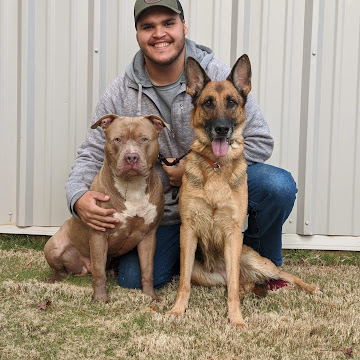
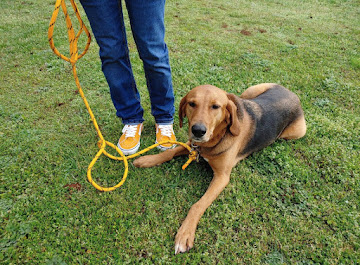
Summer is the season that exposes every gap in a dog's training. Families travel more, backyards fill with guests, neighborhood walks get busier, and environmental stressors like thunderstorms and fireworks spike. The dogs that thrive in summer are almost always the ones whose owners used spring to reinforce obedience, socialization, and recall. Whether you have a 10-week-old puppy or a 10-year-old family dog, the weeks before Memorial Day are the most strategic training window of the year.
Summer Is Peak Risk Season for Dogs
The American Humane Association and multiple shelter networks consistently report that dog intakes and lost-dog reports spike between May and August. The American Kennel Club notes that the Fourth of July is the single busiest day of the year for animal shelters, with lost-dog intakes rising by roughly 30–60% in the days surrounding the holiday. Thunderstorms, fireworks, open doors during cookouts, and unfamiliar visitors all increase the chance of escape. A dog with a reliable recall, a solid "place" command, and calm door manners is dramatically less likely to bolt — and far easier to recover if they do.
"July 5 is historically the busiest intake day at U.S. shelters"
— American Kennel Club & American Humane Association
Heat, Pavement, and the Hidden Cost of Poor Leash Manners
The Journal of the American Veterinary Medical Association has documented that asphalt surface temperatures can reach 125–140°F when the ambient air temperature is just 87°F — hot enough to cause paw pad burns in under 60 seconds. A dog that pulls on the leash spends far more time on hot surfaces and reaches an unsafe core temperature faster. Loose-leash walking is not cosmetic; in Georgia summers, it is a safety skill. Training a controlled heel before June means shorter, cooler, calmer walks all season long.
"Asphalt can reach 140°F on an 87°F day — enough to burn paws in under 60 seconds"
— Journal of the American Veterinary Medical Association
Puppies Hit Their Socialization Window in Summer
Puppies born in the spring hit the critical socialization window (roughly 3–14 weeks per AVSAB) right as summer begins. This is an enormous opportunity. Summer gives puppies natural exposure to thunderstorms, fireworks, crowds at outdoor markets, children on bikes, delivery drivers, and guests in the home. Structured, controlled exposure during this period builds lifelong confidence. Puppies that miss summer socialization commonly show noise phobias, storm anxiety, and guest-related reactivity that persists into adulthood.
Older Dogs Need a Pre-Summer Tune-Up
Adult and senior dogs often "lose" skills they learned years ago simply because those skills have not been practiced in high-distraction contexts. An 8-year-old Labrador with a perfect living-room recall may fail completely when a neighbor's children run through an open gate. A 2019 study in Applied Animal Behaviour Science found that obedience skills decay measurably within 6–12 months without reinforcement in varied environments. Spring is the ideal time to proof — not reteach — commands in the settings your dog will actually face in June, July, and August.
"Obedience skills measurably decay within 6–12 months without reinforcement"
— Applied Animal Behaviour Science, 2019
What to Prioritize Before Summer Arrives
The highest-leverage summer skills are recall ("come"), place/settle, loose-leash walking, and calm greetings at the door. Add desensitization to fireworks and thunder audio at low volume over several weeks, and train a reliable "leave it" for dropped food at cookouts and unknown objects on trails. Two to three focused weeks of daily sessions — 10 to 15 minutes each — covers most of this ground for a dog with any training foundation. Puppies and untrained adults benefit from a structured program with a professional to compress the timeline.
The Bottom Line
Summer rewards the prepared and punishes the procrastinator. A few focused weeks of training in April and May translate into a calmer, safer, more portable dog for the entire season. If you are not sure where to start, a professional evaluation will tell you exactly which skills need work and which are already summer-ready.
Book a Free Consultation