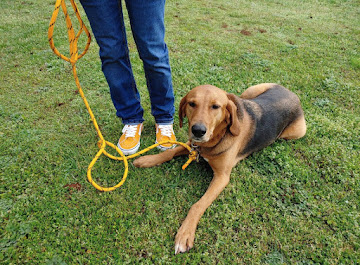
Ask most dog owners when they plan to start training their puppy and you'll often hear "once they're a little older." But decades of canine behavioral research tell a very different story. The neurological window for learning, socialization, and emotional development is widest in the first 16 weeks of life — and what happens (or doesn't happen) during that time has lasting consequences for the dog's adult temperament, trainability, and safety.
Critical Periods in Canine Development
Developmental biologists Scott and Fuller conducted landmark research beginning in the 1940s at the Jackson Laboratory, identifying discrete sensitive periods in dog development. Their work, later expanded upon and published in the seminal book "Genetics and the Social Behavior of the Dog" (1965), identified the socialization period (3–12 weeks) as the phase during which neural pathways responsible for fear responses, social bonding, and environmental adaptation are most plastic. Post this window, the brain's amygdala — responsible for processing fear — becomes progressively less malleable.
"Socialization period: 3–12 weeks (peak plasticity)"
— Scott & Fuller, Genetics and the Social Behavior of the Dog, 1965
Positive Reinforcement and Neural Pathways
A 2021 study in Scientific Reports (Springer Nature) analyzed training outcomes across 92 dogs over 12 months and found that puppies exposed to reward-based training before 16 weeks of age showed significantly higher performance on executive function tasks — the canine equivalent of impulse control — compared to dogs that began training later. The mechanism is straightforward: reward-based learning increases dopaminergic signaling in the prefrontal cortex, reinforcing neural pathways that support attention, inhibition, and associative learning.
"Puppies trained before 16 weeks show significantly higher impulse control scores"
— Scientific Reports, Springer Nature, 2021
Behavioral Problems in Untrained Dogs
The American Kennel Club estimates that over 3.3 million dogs are surrendered to U.S. shelters each year, and the ASPCA reports that behavioral problems — not health issues — are the #1 reason owners relinquish dogs. These include excessive barking, destructive chewing, aggression, house soiling, and separation anxiety. A 2019 study in Preventive Veterinary Medicine found that dogs enrolled in puppy classes before 20 weeks of age were 15% less likely to be surrendered to shelters by age 3 compared to dogs with no formal training.
"Behavioral problems are the #1 reason dogs are surrendered to shelters"
— ASPCA National Rehoming Survey
Vaccine Status Is Not a Valid Excuse to Wait
A common misconception is that puppies must complete their full vaccine series before attending training classes or going outside. The AVSAB position statement on puppy socialization explicitly states: "The risks of a dog developing serious behavioral problems as an adult as a result of poor socialization far outweigh the small risk of infection before full vaccination." Reputable puppy classes require at least one round of DHPP vaccines and deworming, which provides sufficient protection in a controlled indoor environment.
The Bottom Line
The science is unambiguous: the earlier you start, the better the outcome. A puppy that receives structured training and broad socialization before 16 weeks has a measurably better chance of becoming a stable, well-adjusted adult dog. Waiting is a risk — and one that the data consistently shows isn't worth taking.
Book a Free Consultation