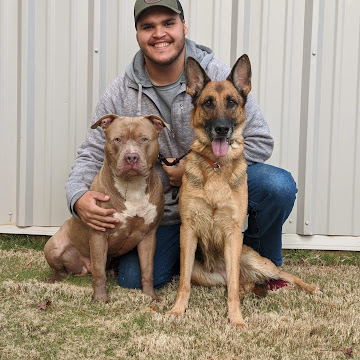
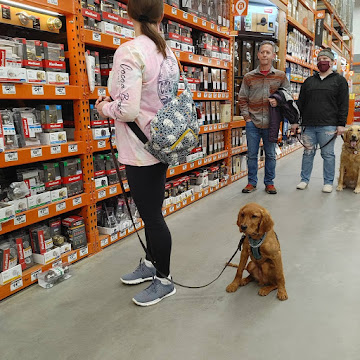
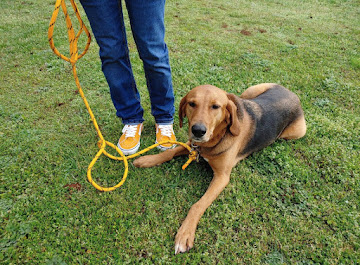
German Shepherds are bred to work. That is not a metaphor — it is a literal description of what selective breeding has produced over more than a century: a dog with a high-output nervous system, significant physical capability, and a mind that is always looking for a job. When that mind does not have a job, it invents one. Sometimes the invented job is acceptable. Often it is not. This guide is not about philosophy or theory. It is a practical breakdown of what a German Shepherd needs to be trained on, how to sequence those skills, how much physical and mental exercise is genuinely required, and what real-world competencies separate a GSD that is a pleasure to live with from one that is a management problem. Whether you have a 10-week-old puppy or a two-year-old rescue who has never had structure, the fundamentals are the same.
The Foundation Skills: What Every GSD Must Have Before Anything Else
Before advanced obedience, before protection work, before trick training or agility — there are four non-negotiable foundation skills every German Shepherd must have. First: name recognition and attention. Your dog must reliably look at you when their name is called, in any environment, with any level of distraction present. Without this, no other training is reliable. Second: loose-leash walking. A 70-pound GSD that pulls is not inconvenient — it is dangerous. Loose-leash walking must be trained on a flat collar in real environments, not just a quiet backyard. Third: a solid sit-stay and down-stay. Not a sit that breaks when a squirrel moves. A stay that holds through distractions for a full minute minimum before you advance. Fourth: a reliable recall. Your dog must come when called, every time, from any distance, in any environment. This skill is not optional — it is life-saving. Build these four skills before adding anything else. Owners who skip this foundation spend years dealing with behavioral problems that trace directly back to these gaps.
"Dogs with reliable recall are 3x less likely to be involved in an off-leash incident resulting in injury to the dog or another animal"
— Journal of Veterinary Behavior, 2019
Command Sequencing: What to Teach and When
German Shepherds learn quickly enough that sequencing matters. Introduce commands in the wrong order and you create confusion and competing behaviors. Start weeks 1–4 with name recognition, sit, down, and leash pressure introduction. Weeks 4–8: sit-stay and down-stay under mild distraction, loose-leash walking in multiple environments, and recall in a low-distraction space with a long line. Weeks 8–16: introduce place (a specific mat or platform your dog must go to and hold), build stay duration and distraction resistance, begin heel work at your side rather than simply not pulling. Weeks 16+: off-leash reliability in varied environments, heel with changes of direction, recall with competing distractions present. The "place" command is often the highest-value skill we teach GSD owners — it gives the dog a clear job in the home, prevents door-dashing and jumping on guests, and provides a structured way to manage the dog during high-traffic situations without crating.
How Much Exercise a German Shepherd Actually Needs
The standard answer — "at least two hours a day" — is incomplete. German Shepherds need two kinds of exercise: physical and mental. Physical exercise without mental challenge produces a dog that is physically fit but behaviorally chaotic. Mental exercise without adequate physical output produces a dog that is engaged but still destructive from pent-up energy. A well-structured day for an adult GSD includes 45–60 minutes of real physical exercise (not a slow neighborhood walk — structured movement, fetch, trail time, or a weighted drag harness), plus 15–20 minutes of active training or problem-solving. Food-dispensing toys, sniff work, and obedience sessions count as mental exercise. Puppies under 12 months require significantly less structured physical exercise due to open growth plates — five minutes per month of age, twice daily, is the standard veterinary guideline. Overexercising a GSD puppy causes joint damage that presents later in life.
"Hip and elbow dysplasia affects an estimated 19% of German Shepherds — a rate significantly influenced by exercise load during the first 12 months of development"
— Orthopedic Foundation for Animals, 2023 breed statistics
Leash Reactivity in German Shepherds: Why It Happens and What to Do
Leash reactivity is the most common behavioral complaint we receive from GSD owners across North Georgia. The dog is fine at home, fine in the yard, fine with family members — but lunges, barks, or snarls at other dogs or strangers on leash. There is a specific reason this happens in this breed more than most: German Shepherds are genetically oriented toward threat assessment. A dog moving toward them on a leash triggers an evaluative response — is this safe? — and when the dog cannot perform its normal investigative behavior (approaching, sniffing, circling) because it is on a leash, that frustration converts to reactivity. The fix is not flooding the dog with exposure. It is systematic desensitization at threshold distance, paired with a conditioned neutral response, while building the foundation skills that give the dog an alternative behavior to perform. Most GSD leash reactivity cases respond well within 6–8 weeks of consistent structured work.
Resource Guarding: The GSD Behavior Problem Owners Ignore Until It Bites Someone
Resource guarding in German Shepherds frequently goes unaddressed because the early signs are subtle: a stiffening of the body when approached near food, a low rumble when a toy is touched, moving away with an item when someone walks by. Owners interpret these as quirks rather than warning signs. Resource guarding is a natural survival behavior — dogs guard things they value. In a GSD, that instinct is amplified by the breed's protective drives. Left unaddressed, it escalates predictably. The guarding behavior that starts with a food bowl at 8 months is biting a child at 18 months. Treatment requires a specific protocol: not punishing the growl (the growl is communication — removing it leaves biting with no warning), but systematically changing the dog's emotional association with approach near valued items. This is not a behavior to manage around; it is a behavior to actively treat.
"Resource guarding is a factor in approximately 40% of serious dog bites involving family members — and is one of the most treatable behavior problems when addressed early"
— Applied Animal Behaviour Science, volume 138
Off-Leash Reliability: The Standard Every GSD Owner Should Aim For
Off-leash reliability is not a luxury skill for German Shepherds — it is a safety requirement. A GSD that cannot be recalled reliably is a GSD that should never be off-leash outside a secured space, period. Building off-leash reliability requires three things: a recall that has been trained to fluency on a long line before the leash is ever dropped, a clear consequence structure (every recall must be reinforced — never call your dog and then do something they dislike), and a proofing process where the recall is tested and rebuilt in progressively more distracting environments. Most owners try to go off-leash too early. The test is simple: can your dog recall reliably in your neighborhood, with other dogs visible, with squirrels present, and with other people calling to them? If the answer is no to any of those, the long line stays on. Work the long line until the answer is consistently yes in all of them.
Crate Training and Alone Time: Preventing Separation Anxiety Before It Starts
German Shepherds bond intensely with their owners — it is one of the breed's most beloved traits and one of its most commonly mismanaged ones. That bond becomes separation anxiety when dogs are never taught that being alone is safe and temporary. Crate training, done correctly, is the most reliable prevention tool. The crate should be introduced as a neutral, positive space — not a punishment — with meals fed inside it and short departures practiced from week one. The critical mistake most GSD owners make: they allow unrestricted access to the house and their presence for the first weeks or months, then suddenly crate the dog when work starts or life demands it. The dog has no framework for being alone and falls apart. Start structure on day one. Short departures, neutral re-entries (no big hellos), and predictable alone-time blocks teach a GSD that departure is not permanent and that calm behavior is expected.
Protection Drive: How to Handle a GSD That Shows Guarding Behavior
Not every German Shepherd has significant protection drive, but many do — particularly from working lines. Owners of drive-heavy GSDs frequently make one of two mistakes: they suppress the behavior entirely (which produces a dog that gives no warning before acting) or they accidentally reinforce it (letting the dog "protect" them from strangers, the mailman, or guests creates a dog that believes this is its job). Neither is acceptable. A GSD with protection drive needs structured outlet and clear rules: protection behavior is permitted when and only when the handler commands it. Without formal protection training with a qualified trainer, a GSD should never be allowed to perform guarding behaviors on command or by default. If your dog is showing unsolicited protective behavior toward guests, strangers, or family members, that requires professional evaluation — not management, and not encouragement.
The Training Tools Question: What Works for German Shepherds
German Shepherds are sensitive enough that harsh corrections damage trust and create avoidance — and strong enough that a flat collar and treats alone are frequently insufficient for a drive-heavy adult dog with established problem behaviors. The honest answer: tool selection depends on the individual dog, the specific behavior being addressed, and the handler's skill level. For puppies and dogs with mild issues, positive reinforcement with marker training is highly effective and should be the starting point. For adult dogs with established reactivity, significant leash pulling, or aggressive behaviors, tools like prong collars or e-collars may be appropriate — but only in the hands of a trainer who understands their use. A tool used incorrectly creates more problems than it solves. The conversation about tools should happen with a professional who has evaluated your specific dog, not from a YouTube video or a Facebook group.
"E-collar training, when implemented correctly by a qualified trainer, has been shown to produce faster behavior change with less stress than punishment-based correction methods in working breeds"
— Journal of Veterinary Behavior, e-collar efficacy review
The Bottom Line
A well-trained German Shepherd is one of the most capable, loyal, and rewarding dogs a person can own. An untrained one — or one with a patchwork of half-completed training — is among the most difficult to manage. The difference between those two outcomes is almost entirely determined by what the owner commits to in the first year. If you are in North Georgia and working with a German Shepherd — whether a new puppy, a rescued adult, or a dog with existing behavioral challenges — Next Generation Dog Training specializes in exactly this breed and can design a program matched to where your dog is right now.
Book a Free ConsultationSources & Citations
- [1]AKC: German Shepherd Dog Breed Standards and History
- [2]Orthopedic Foundation for Animals: GSD Hip and Elbow Statistics
- [3]Journal of Veterinary Behavior: Recall and Off-Leash Safety
- [4]Applied Animal Behaviour Science: Resource Guarding in Domestic Dogs
- [5]American Veterinary Society of Animal Behavior: Position Statement on Training Methods