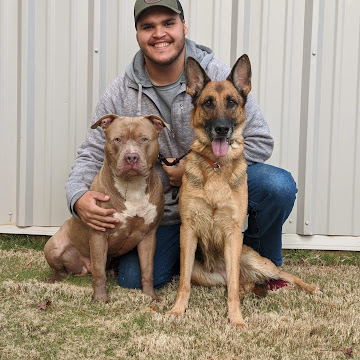
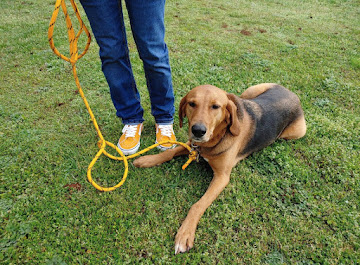
North Georgia is one of the most underrated hiking destinations in the Southeast. From the waterfalls of the Chattahoochee National Forest to the canyon rims at Cloudland to the ridgelines above Kennesaw Mountain, the region offers genuine wilderness within an hour or two of Atlanta — and the vast majority of it welcomes dogs on leash. But "dog-friendly" on a trail sign and "ready for this hike" are two different things. A dog that cannot hold a leash, charges other dogs at trailhead parking lots, or ignores recall near a cliff edge is not ready for the trail, regardless of fitness level. Below is our honest guide to the best trails in the region — and what your dog actually needs to be able to do before you load up the truck.
Kennesaw Mountain — Cheatham Hill / Kolb Farm Loop (5.8 miles)
The closest serious trail to most of our North Georgia clients, Kennesaw Mountain National Battlefield Park sits right in Cobb County and offers nearly 20 miles of dog-friendly trail across its network. The Cheatham Hill and Kolb Farm Loop covers 5.8 miles of compacted dirt and sandy trail that is genuinely easy on dog paws — no sharp rock, no significant scrambling. There is a dog bowl fountain at the midpoint. This is the trail we most often recommend for owners who want to start testing their dog on-trail: enough foot traffic to practice loose-leash walking around distractions, enough forest to give the dog a mental break from urban stimulation. Leashes required throughout. Parking fills early on weekends — arrive before 8 a.m.
"Kennesaw Mountain receives over 1.5 million visitors annually, making leash reliability and calm greeting behavior essential skills before your first visit"
— National Park Service visitation data
Red Top Mountain State Park — Homestead Trail (5.3 miles)
Red Top Mountain sits on the shores of Lake Allatoona in Bartow County — squarely in the territory we serve around Cartersville and Acworth. The Homestead Trail covers 5.3 miles of gently rolling terrain along a calm lake shore, with enough elevation change to work a dog's cardiovascular system without demanding technical footing. The lakeside sections are beautiful and offer natural water access for dogs that enjoy swimming. The park charges a $5 parking fee and requires dogs to be leashed at all times. Red Top Mountain is one of the few trails where the terrain is forgiving enough for older dogs and dogs recovering from minor injuries, while still offering meaningful exercise for high-drive dogs when covered at pace.
Sweetwater Creek State Park (2–6 miles, multiple routes)
Sweetwater Creek in Douglas County is one of the most versatile dog-hiking destinations near Atlanta. The trail network ranges from a short 2-mile loop to a full 6-mile route, all featuring forest landscapes and a dramatic whitewater-filled creek. Post-hike swimming is available at the park's lake. The creek itself is a major draw for water-loving dogs — retrievers, working breeds, and any dog that runs hot in Georgia summers make beelines for it. Be aware: the rock surfaces near the creek can be slick, and dogs with poor impulse control near moving water need reliable "leave it" and leash manners before this trail is safe. The park has a $5 parking fee. Leashes required on all trails.
"Heat-related illness is the leading cause of trail emergency in dogs — water access trails like Sweetwater Creek reduce this risk significantly during Georgia summers"
— American Kennel Club Canine Health Foundation
Raven Cliff Falls Trail (5 miles)
Raven Cliff Falls is one of the most striking waterfall hikes in North Georgia, sitting in the Chattahoochee National Forest between Helen and Dahlonega. The trail covers 5 miles of gently rolling terrain with a deep swimming hole near the trailhead — a significant draw for dogs on warm days. The route follows Dodd Creek most of the way, giving dogs near-constant water access. The trail surface is compacted dirt and root, manageable for most dogs but worth noting for senior dogs or those with joint issues. No fees to park, no day-use pass required as of this writing. Leashes are required in the national forest. This is a rewarding intermediate hike and one of the best in the region for dogs that enjoy moving water.
Bear Creek Trail near Ellijay (1.9 miles)
If you have a dog that is new to trail hiking — or a dog that has shown reactivity in urban settings and you want to test them in a lower-stimulus environment — Bear Creek is the right starting point. At just 1.9 miles, the trail covers level terrain through shady forest with a creek running alongside for much of the route. The low mileage means you are not committing a reactive or physically unfit dog to more than they can handle. The trail sees moderate foot traffic, enough to practice neutral dog passes and calm human greetings without the overwhelming volume of a busier park. Located near Ellijay, it makes an easy half-day trip from the greater Atlanta area.
Vickery Creek Trail in Roswell (3–5+ miles)
Vickery Creek is a local favorite in Roswell — well-maintained, forested, and featuring a sandy swimming beach at the base of a historic mill waterfall that dogs love. The trail network offers 3 to 5+ miles depending on your route, with the option to extend into the Chattahoochee River National Recreation Area for additional mileage. This is a busier trail on weekends, which makes it an excellent training ground for dogs that need to practice neutral behavior around other dogs and people at close range. The combination of natural beauty and training utility makes Vickery Creek one of the most useful trails for owners actively working through reactivity with their dogs in a real-world setting.
Emery Creek Trail near Ellijay (6 miles)
For owners with higher-endurance dogs — working breeds, sporting breeds, young mixed breeds with seemingly unlimited energy — Emery Creek is one of the best options in the region. The trail covers 6 miles near Ellijay with multiple creek crossings throughout, giving dogs water access at regular intervals. The terrain is more varied than the flatter options above and provides genuine physical and mental stimulation. This is the trail we recommend most often to clients whose dogs need the kind of exhaustion that only extended trail time provides. Be prepared for wet paws: the creek crossings are real, and dogs will get in the water.
What Your Dog Needs Before Any of These Trails
Trail readiness is not just physical fitness — it is behavioral fitness. Before taking your dog on any of the trails above, your dog should be able to: walk on a loose leash for the full distance of the hike without constant correction; pass other dogs and people on trail without lunging, barking, or requiring you to physically restrain them; respond reliably to a recall in a moderately distracting environment; and hold a "leave it" when encountering wildlife, food left by other hikers, or hazardous plants and fungi. Dogs that cannot do these things are not trail-ready — they are training candidates. A dog that pulls, lunges, and ignores commands does not have a better day on a trail than in a neighborhood; they just have those problems in a more dangerous environment. The good news: all of these skills are trainable, and most dogs can develop solid trail manners within 4 to 6 weeks of a structured program.
"85% of dog-related trail incidents involve leash pulling, lunging at other dogs, or failure to respond to recall — all fully addressable through structured training"
— Trail safety reports, American Hiking Society
Trail Safety Fundamentals for North Georgia Dog Owners
Georgia summers are brutal, and dogs do not regulate heat as efficiently as humans. Always bring more water than you think you need — a general guideline is one ounce of water per pound of body weight for a moderate hike. Bring a collapsible bowl; most dogs will not drink from a bottle effectively. Check your dog's paw pads before and after every hike for cuts, cracks, and embedded debris. Japanese chaff flower seeds, found throughout North Georgia trails in late summer and fall, stick aggressively to fur and can work their way into skin — check your dog's coat, ears, and paws thoroughly after every fall hike. Know the signs of heat exhaustion: excessive panting, drooling, disorientation, and bright red gums. If you see these, get the dog into shade and cool water immediately and contact a veterinarian.
The Bottom Line
North Georgia's trails are genuinely worth the drive — for you and for your dog. But the dogs that get the most out of these experiences are the ones whose owners invested in their training before they hit the trailhead. A dog with solid loose-leash walking, a reliable recall, and calm greeting behavior is a pleasure on any trail. A dog without those skills turns a beautiful hike into an exhausting management exercise. If your dog is not trail-ready yet, Next Generation Dog Training serves the entire North Georgia region and can get you there faster than you might expect.
Book a Free ConsultationSources & Citations
- [1]Atlanta Trails: Georgia's Best Dog-Friendly Trails
- [2]Atlanta Trails: Dog-Friendly Hikes Near Atlanta
- [3]Georgia State Parks: Dog-Friendly Park Finder
- [4]AKC Canine Health Foundation: Heat Safety for Dogs
- [5]National Park Service: Kennesaw Mountain NB Visitation Data
- [6]American Hiking Society: Trail Safety Guidelines